
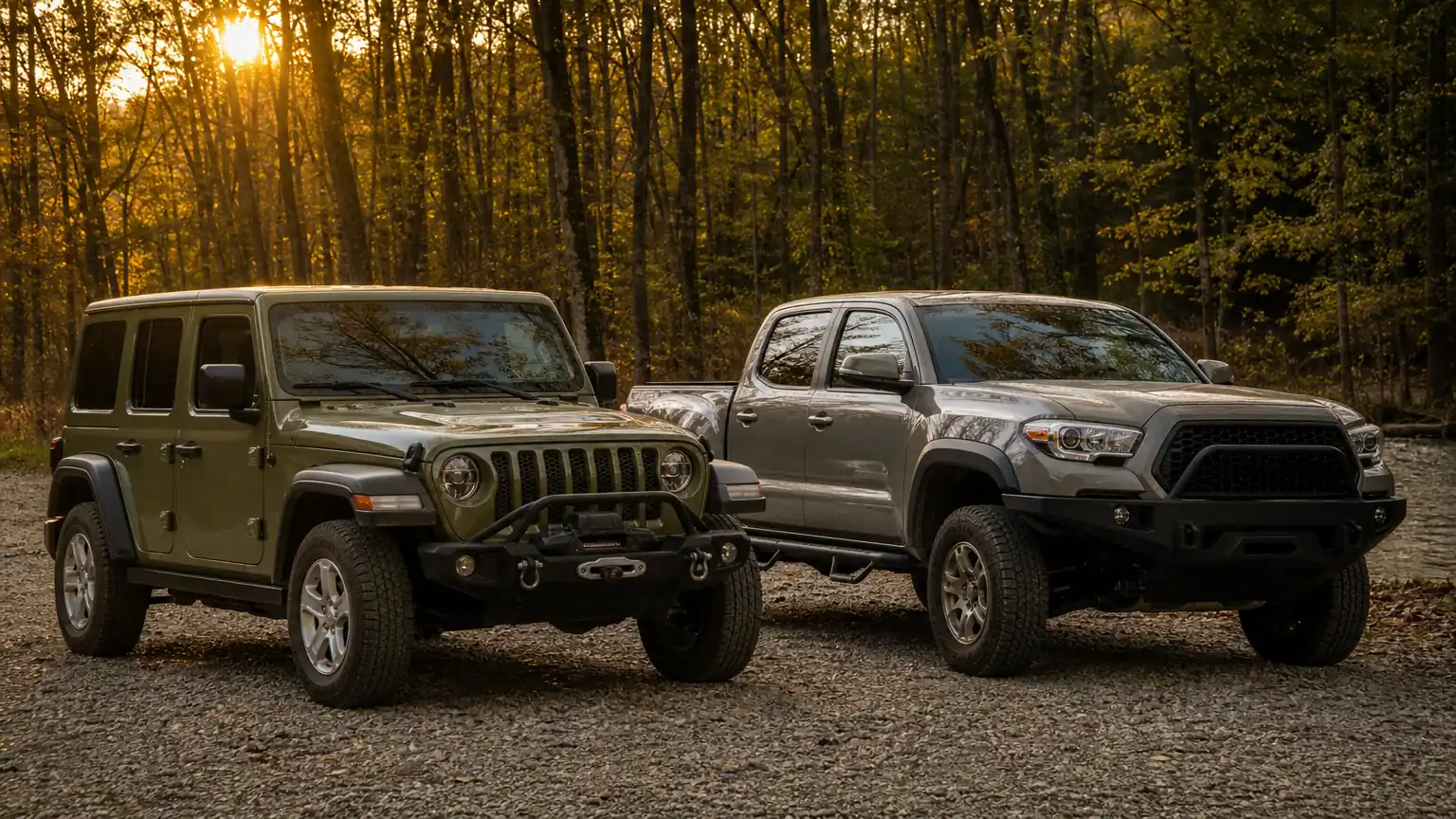
Winch, Bumper & Armor Installation for Jeeps, Trucks & SUVs
Updated October 2026Winch installation, bumpers, skid plates and rock sliders, installed on your Jeep, pickup or SUV at your home or work, on evenings and weekends. If you've been searching for winch installation near me, we come to you within about 30 miles of Louisville, including Southern Indiana, with no trip fee. Noah, the owner, does every install himself, and armor installs start at $120 for labor.
Armor Installation Done Right Means Protection First, Looks Second
A front bumper is usually the first armor an owner buys, and it's often bought for the look. That's backwards. Its real job is to hold a winch solidly, give you recovery points that won't tear out, improve your approach angle, and take a hit without folding into the radiator. If it only looks good, it's decoration. That's as true on a Tacoma or a 4Runner as it is on a Wrangler.
We install armor the way we'd want it on our own rig: clean mounting, proper wiring, and a setup that's ready for the trail. A winch bolted on loose or wired wrong is worse than no winch, because you only find out when you're stuck.
We install proven bolt-on armor, not welded or custom-fabricated bumpers.
Winch, Bumper, Skid Plate & Rock Slider Options
Knowing what we will and won't install, here's the armor we put on Jeeps, pickups and SUVs most. Each piece protects a different part of the vehicle, so most builds end up with more than one. Looking for bed covers, steps or a hitch instead? See our truck accessories page.
Winch-Ready Front Bumpers
A steel bumper with a built-in winch plate, a spot for the fairlead, rated shackle mounts and usually light tabs: the foundation of a recovery-capable front end. Our Jeep bumper installation covers DV8 and other proven brands, full-width or stubby depending on how you drive, and we install winch bumpers on pickups and SUVs too. Most people searching for custom bumper installation near me mean an aftermarket steel bumper like these, and that's what we install; we don't build bumpers from scratch. On a newer truck, the bumper has to work with the front sensors and camera, which we check before you buy. If you're adding lights, the bumper's tabs make it a good time to plan off-road lighting too.
Winches for Jeeps, Trucks and SUVs
A winch sized to your vehicle's real weight, mounted to a winch-ready bumper or mounting plate, with its own wiring to the battery. Warn is our go-to brand for reliability and support. If you've been searching for truck winch installation near me, a half-ton pickup needs a bigger winch than a Wrangler, and we size it from your truck's actual loaded weight. 4WD winch installation on an SUV like a 4Runner or Bronco works the same way.
Skid Plates
Skid plate installation protects what breaks first on rocks: the oil pan and transmission, the transfer case, the fuel tank and the differentials. On independent-front trucks and SUVs, a front skid also covers the front differential and steering parts that hang low. You don't notice skids until one saves you a cracked transfer case and a tow home.
Rock Sliders
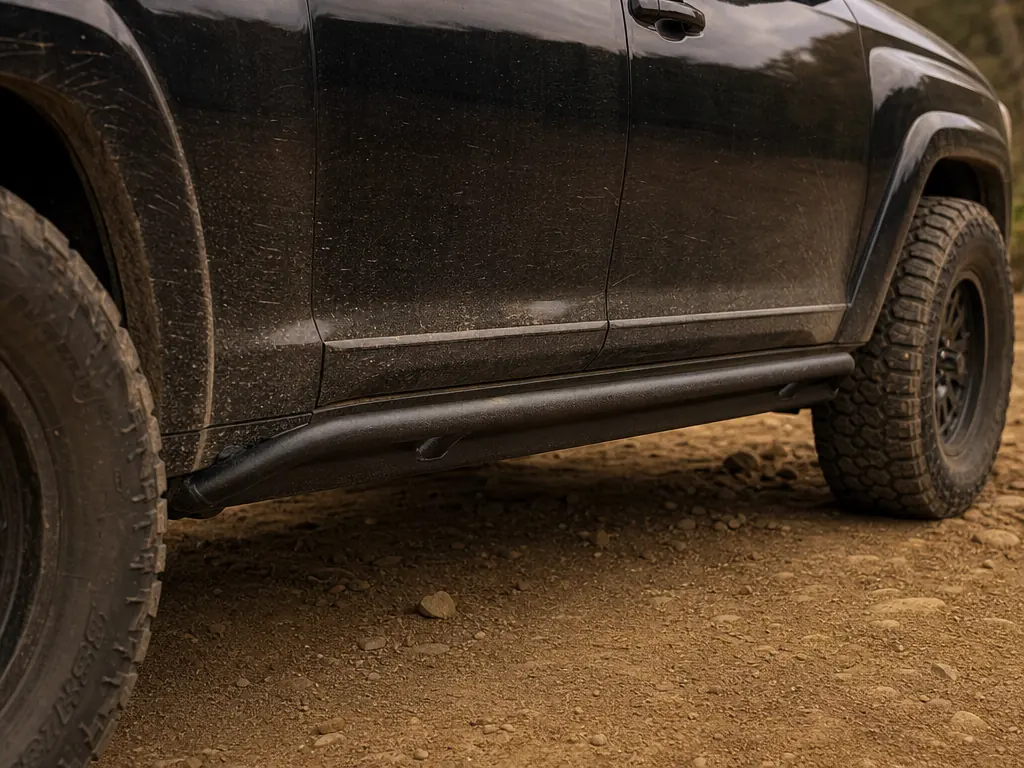
Sliders bolt to the frame and protect the rocker panels under your doors, which are expensive to repair. Side steps and nerf bars mount to the body and crush on the first rock. Frame-mounted sliders can take the vehicle's weight and let it slide off. On a Tacoma, 4Runner or Bronco that sees trails, sliders are usually the first armor worth buying.
Rear Bumpers, Tire Carriers and Recovery Points
A rear bumper with rated recovery points, and often a carrier for a bigger spare once you're on bigger tires. We install both, along with tow hooks, D-ring mounts and mounts for recovery gear like a Hi-Lift jack, traction boards or a shovel.
Jeep Corner Guards and Inner Fenders
Two Jeep-only pieces of armor. Corner guards protect the rear corners of a Wrangler's tub, which take hits on tight trails. Inner fender liners replace the factory plastic in all four wheel wells, open up room for bigger tires and keep mud out of the engine bay.
What Armor and a Winch Add — and the Tradeoffs
Each of those options earns its place, but armor isn't free in weight or in money.
What armor and a winch add:
- A frame-mounted winch you can actually trust to pull your vehicle out
- Rated recovery points front and rear, so a friend can strap you out safely
- Better approach angle, so the front bumper isn't the first thing to hit
- Protection for the radiator, the oil pan, the transfer case and the rockers
- Mounting points for lights and a larger spare tire
The tradeoffs:
- A steel bumper and a winch together can add well over 100 pounds to the front
- That extra weight can make the front sit lower and change how the steering feels
- On many newer Jeeps, pickups and SUVs, a new bumper has to make room for front sensors, a camera or adaptive cruise radar
- Full steel armor is more than a vehicle that never leaves the pavement needs
The honest version: match the armor to how you use the vehicle. A daily driver that sees gravel and the occasional trail is often well served by sliders and a lighter bumper. A rig that runs hard trails wants frame-mounted steel, a real winch and skids. If the front is getting heavy, we'll plan springs or a leveling kit alongside the bumper, because a nose-down vehicle doesn't steer right. Our lift kit installation page covers that side.
How to Choose Off-Road Armor — A Louisville Owner's Guide
Once you know what armor costs in weight, the next question is what to buy first. The order matters, because most owners buy the visible parts first and the parts that prevent the expensive damage last.
Start with what breaks first. If you wheel at all, rock sliders and a transfer case or oil pan skid protect the parts that cost the most to fix after one bad line. They're not exciting, but they save the most money.
Add the front bumper and winch when you start going alone or going farther. A winch matters most when there's no other vehicle to strap you out, or when a creek crossing or muddy hill could leave you stuck.
Then finish the back. A rear bumper, a carrier for a bigger spare and rear recovery points round out the build once you're on bigger tires.
Jeeps and trucks armor differently. A Wrangler or Gladiator has a solid front axle and an exposed tub, so sliders, corner guards and a stubby bumper are the usual path. An F-150, Tacoma, 4Runner or Bronco has independent front suspension that sits lower, so a front skid and sliders come first, and a heavy winch bumper is worth planning with the front springs in mind.
Tell us how you use your Jeep, truck or SUV, and we'll tell you what to buy first and what you can skip.
What Winch and Bumper Installation Costs
With a plan in place, the cost comes down to time and parts. Armor installs start at $120 for labor, the quote is free, and there's no trip fee inside our service area. These are Noah's starting labor prices; the parts are extra:
- Skid plates: from $120
- Tow hooks or D-ring mounts: from $120
- Recovery gear mounts (Hi-Lift jack, traction boards, shovel or axe): from $120
- Winch installation (winch, mounting plate and fairlead): from $180
- Winch wiring (battery cables, solenoid and remote): from $120
- Synthetic rope swap: from $120
- Rock sliders: from $240
- A front or rear bumper: from $240, or from $480 for front and rear together
- Spare tire carrier upgrade: from $120
- Jeep inner fender liners (all four): from $360
- Jeep corner guards: from $480
Bigger builds are quoted at $120 an hour, and you know the price before any work starts. With no storefront or showroom to pay for, we keep the price down without cutting corners on the install. Here's what moves the total.
- What's being installed. A pair of rock sliders is a much shorter job than a bumper, winch and wiring together.
- Wiring. Winch cables to the battery, plus any lights added on the same visit.
- Sensors and cameras. Moving front sensors or a camera into the new bumper adds time.
- Who supplies the parts. We can install armor you already own, whatever the brand, or order it for you from the same suppliers shops use. It usually arrives in 1–3 days, and Noah brings it to the install.
- Several installs on one visit. Usually less than separate appointments.
Winch Installation Done Right — Mounting, Wiring, Rope & Recovery
Here's what separates a good winch installation from a dangerous one. A winch under load puts thousands of pounds through its mount and hundreds of amps through its wiring, so every part of the setup has to be built for that.
Mounting
The winch bolts to a winch plate that's part of a bumper built to hold it, or to a mounting plate made for your vehicle, and that bolts to the frame. We don't hang a winch off a factory or cosmetic bumper. If the mount gives way mid-pull, the winch and the line become a projectile.
Sizing
The usual rule is a winch rated for at least 1.5 times your vehicle's loaded weight: armor, gear, fuel and passengers. That's more than the door-sticker weight, and a vehicle stuck in mud or on a hill needs more still. On the edge between two sizes, go up one.
Wiring
A winch draws hundreds of amps on a hard pull, so it gets its own heavy cables straight to the battery, never shared with your lights. We mount the control box out of the worst of the water and mud and check that your battery can keep up. A weak battery is a common reason a winch slows or quits mid-pull.
Synthetic Rope or Steel Cable
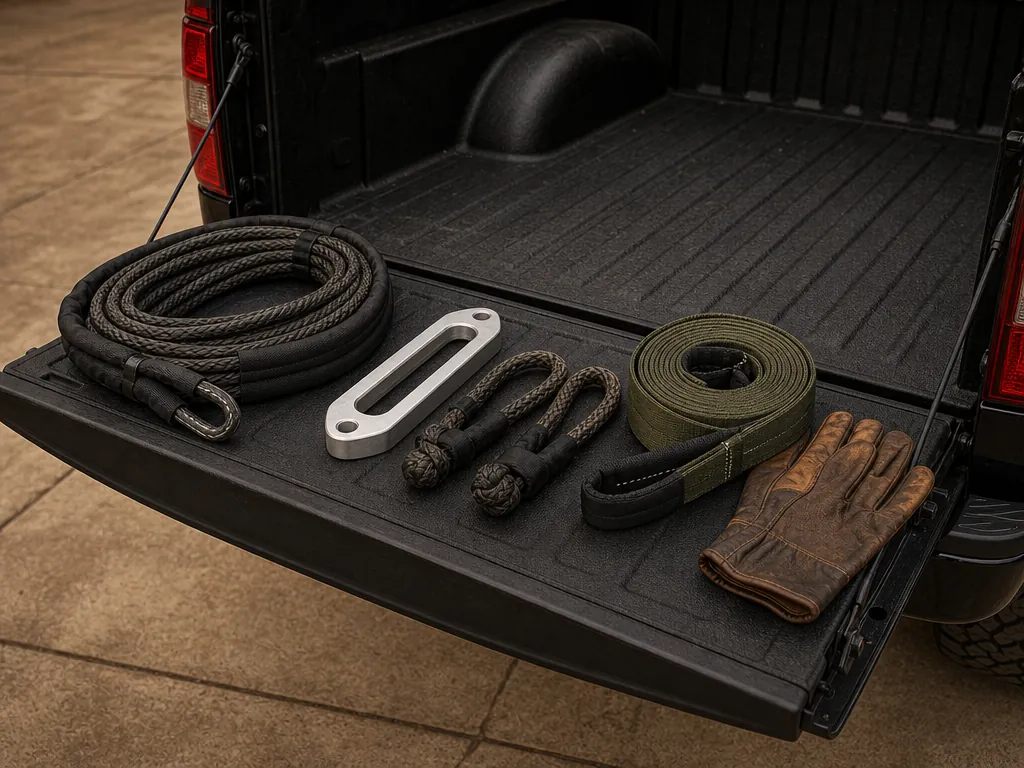
Synthetic rope is lighter, floats, and falls instead of whipping back if it breaks. Steel cable handles rubbing and heat better but stores dangerous energy under load. Most owners are better off with synthetic. The fairlead has to match: aluminum hawse for synthetic, roller for steel.
Recovery Points
A factory tow hook is not a recovery point. We install rated shackle mounts so a kinetic rope or strap can pull your vehicle out without tearing anything loose. Before your first trail day, our before you wheel checklist covers the recovery gear to carry and how to use it safely.
Winch Sizing and Armor Fitment for Jeeps, Pickups & SUVs
The rules above apply to every vehicle, but the right winch size and the right armor change from one to the next. Here's where most builds land. We size from your vehicle's actual loaded weight, not from a chart.
| Vehicle | Typical winch rating | Armor notes |
|---|---|---|
| Wrangler TJ / XJ Cherokee | 8,000–9,500 lb | Lighter Jeeps; sliders and skids make a big difference for the cost |
| Wrangler JK / JL 2-door | 9,500–10,000 lb | Front weight adds up fast with steel; plan springs with the bumper |
| Wrangler JK / JL Unlimited | 10,000 lb | The most common winch install; JL trims may have front sensors or a camera |
| Gladiator JT | 10,000–12,000 lb | Heavier and longer; sliders are longer, and bed weight adds up |
| Toyota Tacoma, 4Runner / Ford Bronco | 9,500–10,000 lb | Independent front; sliders and a front skid first; newer trims have front sensors |
| Half-ton pickups (F-150, Silverado 1500, Ram 1500, Tundra) | 12,000 lb | Heavy front end; many trims carry front sensors, a camera or adaptive cruise radar in the bumper or grille |
Heavy-duty 2500 and 3500 pickups: ask us.
Some newer vehicles need their front camera or radar recalibrated after a bumper change. We don't do recalibration; if your vehicle needs it, it goes to a dealer or a shop with the equipment, and we'll tell you before you buy the bumper.
Each Jeep has its own page covering the rest of what we do for it: the TJ and LJ, the JK and JL, the Gladiator and the XJ Cherokee. Pickups and SUVs are on our mobile truck mechanic page.
5 Winch and Bumper Installation Mistakes — And How We Avoid Them
Knowing the right setup for your vehicle makes the common mistakes easy to spot. These are the ones we see most often on armor that someone else installed.
1. A winch on a bumper that wasn't built for one
A winch bolted to a factory bumper or a cosmetic bumper looks fine until the first hard pull. Then the mount bends or tears out.
How we avoid it: every winch goes on a winch-ready bumper or mounting plate that's bolted to the frame. If your bumper can't take a winch safely, we'll tell you before we install anything.
2. Wiring that can't handle the load
Thin cables, a shared circuit or a winch wired to a tired battery all mean a slow, weak winch, and sometimes melted wiring.
How we avoid it: dedicated heavy cables to the battery, clean routing away from heat and sharp edges, and a battery check before we leave.
3. The wrong fairlead for the line
A synthetic rope run through a rough or worn roller fairlead wears through faster than it should.
How we avoid it: we match the fairlead to the line. That means a hawse fairlead for synthetic rope and a roller for steel cable.
4. Ignoring the weight up front
Steel and a winch can push the front end down, which changes the steering and wears the front suspension faster, on a solid-axle Jeep and an independent-front truck alike.
How we avoid it: we tell you up front if the weight calls for different springs. If the steering already feels loose, see our steering and ball joint repair page.
5. No test and no re-check
A winch that's never run under load can bury its line on the drum the first time you need it, and new bolts can settle.
How we avoid it: we run the winch in and out, spool the line back on under tension, check the bolt torque and walk you through it.
Armor and Winch Installation in Louisville, KY — Built for Kentucky
Those mistakes matter more around here, because Kentucky is hard on armor. Winter road salt eats into scratched bumper coatings, exposed bolts and winch connections, and a bumper that loses its coating starts to rust at every chip. We touch up any coating we mark during the install, and we route and protect the winch wiring to keep salt spray and slush off the connections.
Spring and summer bring muddy hills, creek crossings and wooded trails where the nearest winch anchor is a tree. That's where a properly sized winch, a tree saver strap and rated recovery points stop being nice to have. Many Louisville Jeep and truck owners make the drive to trail areas like .
Closer to home, deer on outer-county back roads are a real risk at dusk, and a strong bumper protects the radiator. Looking for people to wheel with? See our Louisville Jeep community page.
How Our Mobile Armor and Winch Installation Works
Working in Louisville's weather is also why we bring the work to you. Armor installs happen right in your driveway or at your work, on evenings and weekends, with no drop-off to arrange. Here's how a typical job goes.
- 01
Talk it through
Tell Noah about your Jeep, truck or SUV and how you use it. He'll say what to install first, what to skip, and whether the parts you're eyeing fit.
- 02
Get a free quote
A free quote before any work starts, by phone, from a few photos or with a quick stop at your house. Installs start at $120 for labor. No surprises.
- 03
Install at your place
We come to your home or work, and Noah brings the parts with him. We need room around the front of the vehicle and a reasonably level spot to park it.
- 04
Wire, test and walk through
We wire the winch and any lights, run it in and out under tension, check the bolts, and show you how to use your recovery points safely.
- 05
Follow up
If something feels wrong after your first trail day, call us. The full process is on our how it works page.
Winch and Bumper Installation Questions, Answered
Who does winch installation near me in Louisville?
Heritage 4x4 Outfitters installs winches, bumpers, skid plates and rock sliders on Jeeps, pickups and SUVs across Louisville and Southern Indiana, about 30 miles out. Noah, the owner, comes to your home or work and does the install himself, so you don't have to take a day off to drop your vehicle at a shop. Installs start at $120 for labor, the quote is free, and there's no trip fee inside our service area.
Can you install a winch and bumper in my driveway?
Yes. Bumper, winch, slider and skid plate installs happen right in your driveway or your work lot. We need room to work around the front of the vehicle and a reasonably level place to park it. If a part you've picked isn't a good fit for your vehicle, we'll tell you before you buy.
What size winch do I need?
A winch rated for at least 1.5 times your vehicle's loaded weight. For most JK and JL Unlimiteds, Tacomas and 4Runners that's about a 10,000 lb winch; a Gladiator or a half-ton pickup usually needs 12,000 lb. We size it from your actual setup so it isn't working at its limit every pull.
Should I get synthetic rope or steel cable?
For most owners, synthetic. It's lighter, floats, and drops instead of whipping back if it breaks. Steel holds up better to rubbing and heat.
Do I need a new bumper to add a winch?
Almost always, yes. A winch needs a mount that's built for its full pulling load and bolted to the frame, and most factory bumpers aren't that. A winch-ready bumper includes the winch plate, room for the fairlead and rated recovery points. Some trucks and SUVs can take a hidden winch mount behind the factory bumper instead; we'll tell you if yours can.
Will a new bumper work with my sensors and camera?
It depends on the bumper and your trim. Many newer Jeeps, pickups and SUVs have front parking sensors, a front camera or adaptive cruise radar that the new bumper has to make room for. We check before you buy, so you don't end up with a bumper that disables a feature you use. If your vehicle needs its camera or radar recalibrated afterward, that's done at a dealer or a shop with the equipment; we don't do recalibration.
Can I bring my own bumper or winch?
Yes, whatever the brand. We can install armor you've already bought, or help you choose it. Parts you supply carry their manufacturer's warranty, just like parts we supply, and our labor to install them carries our lifetime warranty. The details are in our terms and conditions.
Do you do custom bumper installation?
Yes, if by custom you mean an aftermarket bumper. We install proven bolt-on bumpers, winches, skid plates and sliders from brands like Warn, DV8, Rock Krawler and MetalCloak, on Jeeps, pickups and SUVs. We don't build bumpers from scratch or do welding. If your build truly needs custom fabrication, we'll tell you that honestly instead of forcing a part that doesn't fit.
Do you put armor on pickups and SUVs, or just Jeeps?
Both. Jeeps are our specialty, and we install bumpers, winches, sliders and skids on pickups like the F-150, Silverado, Ram 1500, Tacoma and Tundra, and on SUVs like the 4Runner and Bronco. For bed covers, steps, hitches and racks, see our truck accessories page.

Armor and Winch Installation Across Louisville & Southern Indiana
We install bumpers, winches, skid plates and rock sliders at homes and workplaces within about 30 miles of Louisville. That covers Jefferson, Oldham, Bullitt, Shelby and Spencer counties in Kentucky, and Clark and Floyd counties in Indiana.
Brands We Trust
A bumper without a winch is half a build, so our armor work pairs DV8 bumpers and sliders with Warn winches, and we install Rock Krawler, MetalCloak, Rock Slide Engineering and EVO Manufacturing too. We'll also install the brand you've already chosen.








Ready to Armor Up Your Rig?
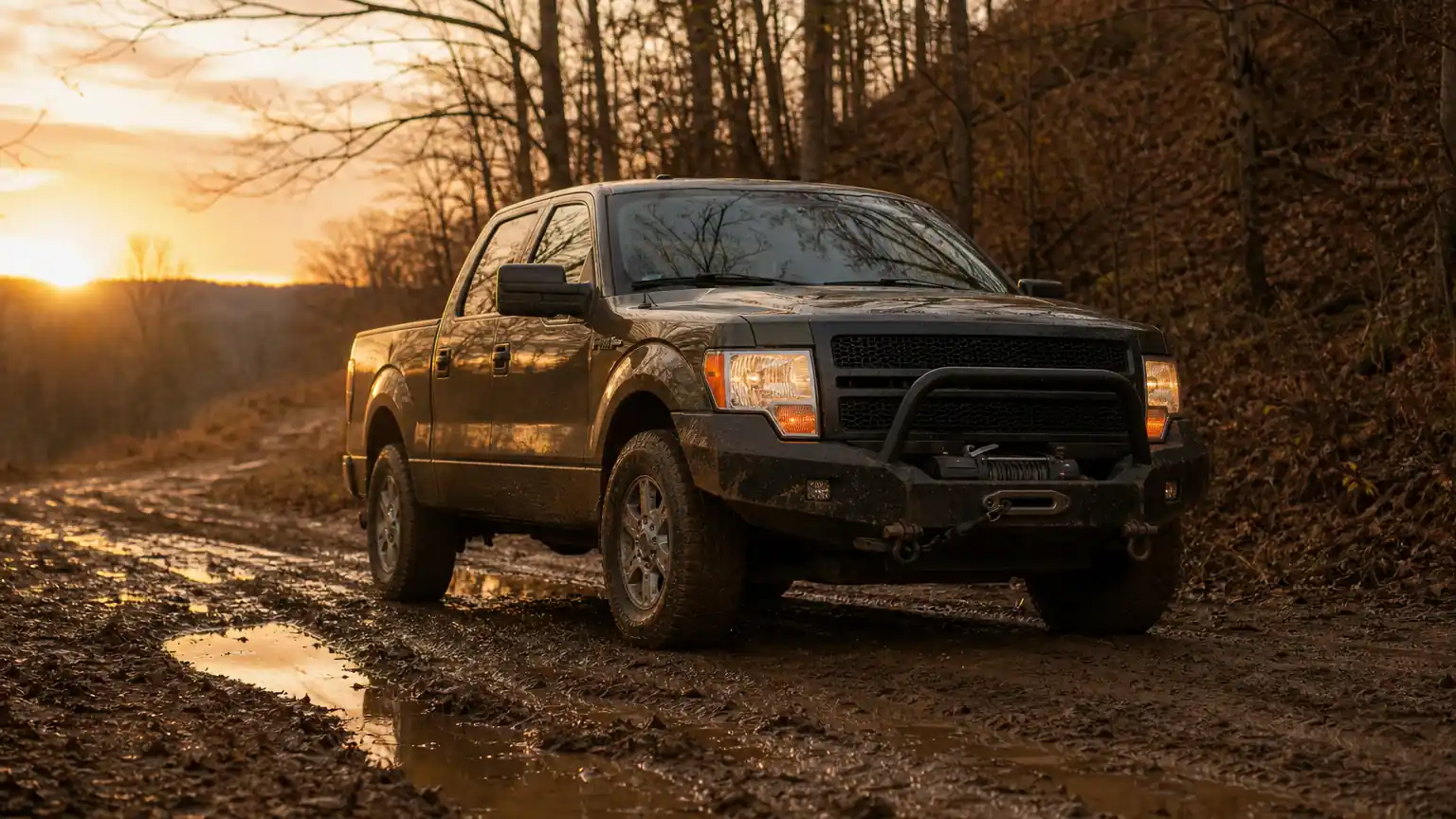
Bumper, winch, sliders or skids, on your Jeep, truck or SUV: one conversation with the owner, a free quote, installs from $120, and the install done right in your driveway.