
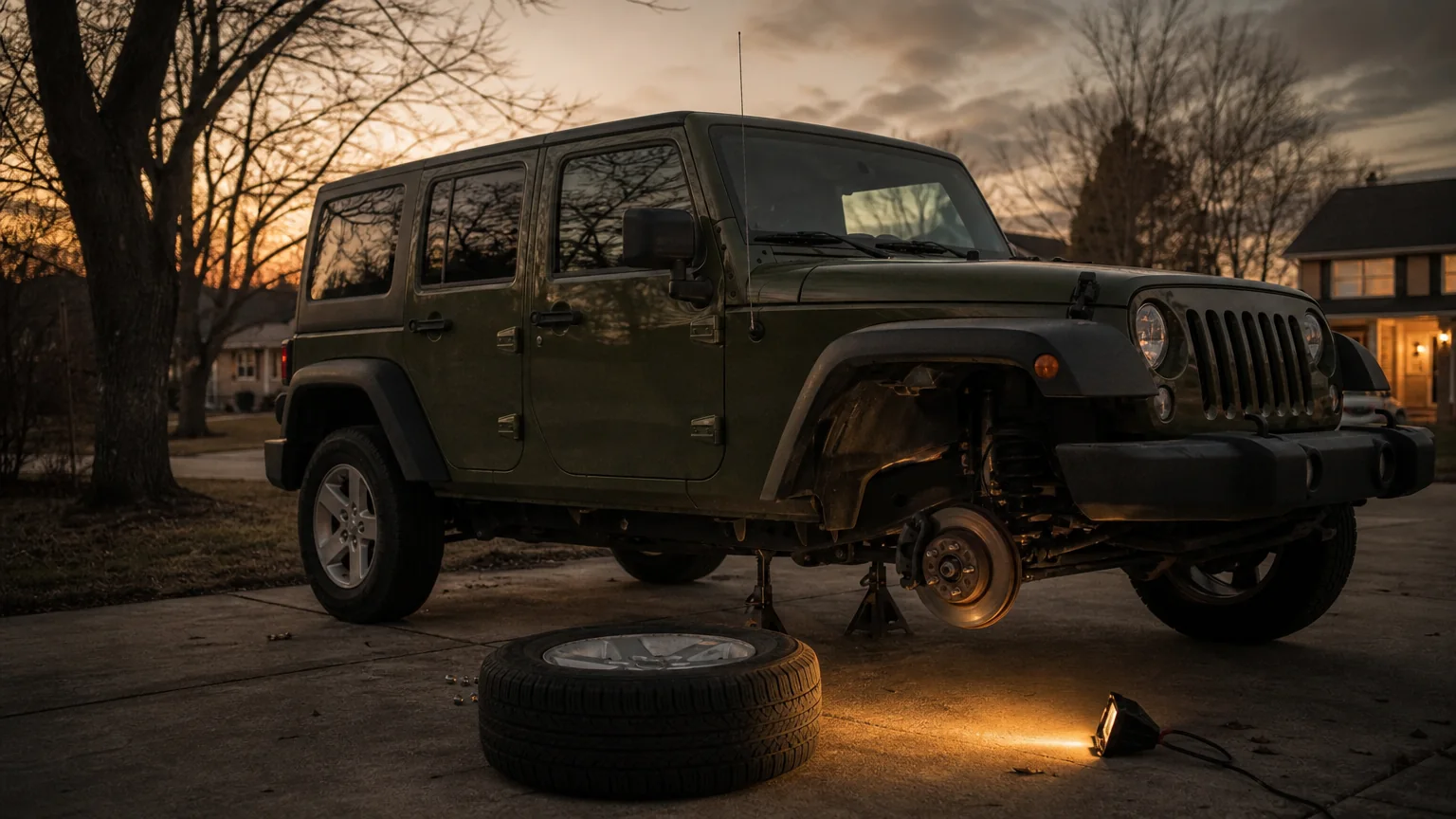
Mobile Brake Repair for Jeeps, Pickups & SUVs — Done in Your Driveway
Updated October 2026Heritage 4x4 Outfitters does mobile brake repair at your home or work across Louisville and Southern Indiana, within about 30 miles, on weekday evenings and weekends. If you've been searching for mobile brake repair near me, here's how it works: you tell us what your brakes are doing, Noah gives you a free quote, and the brake job gets done in your driveway with no trip fee. We work on Jeeps, pickup trucks and SUVs only, and Noah, the owner, does the work himself.
Mobile Brake Repair Done Right Checks the Whole System
A brake job sounds simple: new pads, maybe new rotors, done. But squealing pads are often a symptom of something else, like a caliper slide that's seized, a rotor worn past its limit or a brake hose that's swelling inside. Put new pads on top of those and you're back in a few months with the same noise.
So Noah looks at the whole system on every brake job, not just the part you called about: pads, rotors, calipers and their slides, hoses, lines and fluid. You hear what's worn, what's fine and what can wait, and you decide what gets done. On a Jeep running bigger tires or a pickup that tows, that matters even more, because those brakes work harder than the factory planned for.
Mobile Brake Service: Pads, Rotors, Calipers, Lines & Fluid
Checking the whole system means knowing what each part does. Here's the brake work we bring to your driveway.
Brake Pads
Pads are the friction material that clamps the rotor to stop the wheel. Most pads have a small metal tab that squeals when they get thin, which is the warning to replace them before metal reaches the rotor. Mobile brake pad replacement is the most common brake job we do, and it's always done in pairs, both sides of an axle at once.
Rotors
Rotors are the discs the pads squeeze. Every rotor has a minimum thickness stamped on it. Below that, or when it's warped or deeply grooved, it gets replaced along with the pads. A worn or uneven rotor is also what makes the steering wheel or brake pedal shake when you stop.
Calipers and Slides
The caliper holds the pads and pushes them against the rotor. Its slide pins have to move freely, and in Kentucky's road salt they often seize, which wears one pad far faster than the other or makes the vehicle pull. We clean and lubricate the slides on every brake job, and replace a caliper that's sticking or leaking.
Brake Lines and Hoses
Steel lines and rubber hoses carry brake fluid to each wheel. Salt rusts the steel lines, and old hoses can swell inside and hold a caliper on. We replace rusted lines and cracked or swollen hoses in your driveway.
Brake Fluid
Brake fluid slowly absorbs water, which lowers its boiling point and can make the pedal feel soft after hard braking. We flush and bleed the system when the fluid is old or after a line or caliper is replaced.
Signs You Need Brake Repair: Squeal, Grind, Pull or a Soft Pedal
Each of those parts gives its own warning when it's wearing out. Here's what to listen and feel for, and what each one usually means.
Squealing when you brake is usually the pad wear tab telling you the pads are thin. It's the cheapest point to fix them.
Grinding means the pads are gone and metal is hitting the rotor. Stop driving it if you can. Every mile now damages the rotor, and possibly the caliper.
Shaking when you brake, in the steering wheel or the pedal, usually means a rotor is worn unevenly. If the shake happens at highway speed without braking, and it's violent, that's a different problem: see our death wobble page.
Pulling to one side when you stop points to a caliper that's sticking or a hose that's holding pressure on one wheel. Pulling while you drive, without braking, is more often a steering or alignment problem, covered on our steering and ball joint repair page.
A soft or sinking pedal can mean air or water in the fluid, a leak, or a failing master cylinder. Get it checked before you drive far.
A burning smell after driving, especially down a long hill, often means a caliper is dragging and overheating the pads.
The brake warning light can mean low fluid or a worn sensor. Low fluid with no leak usually means the pads have worn down, since the fluid level drops as they wear.
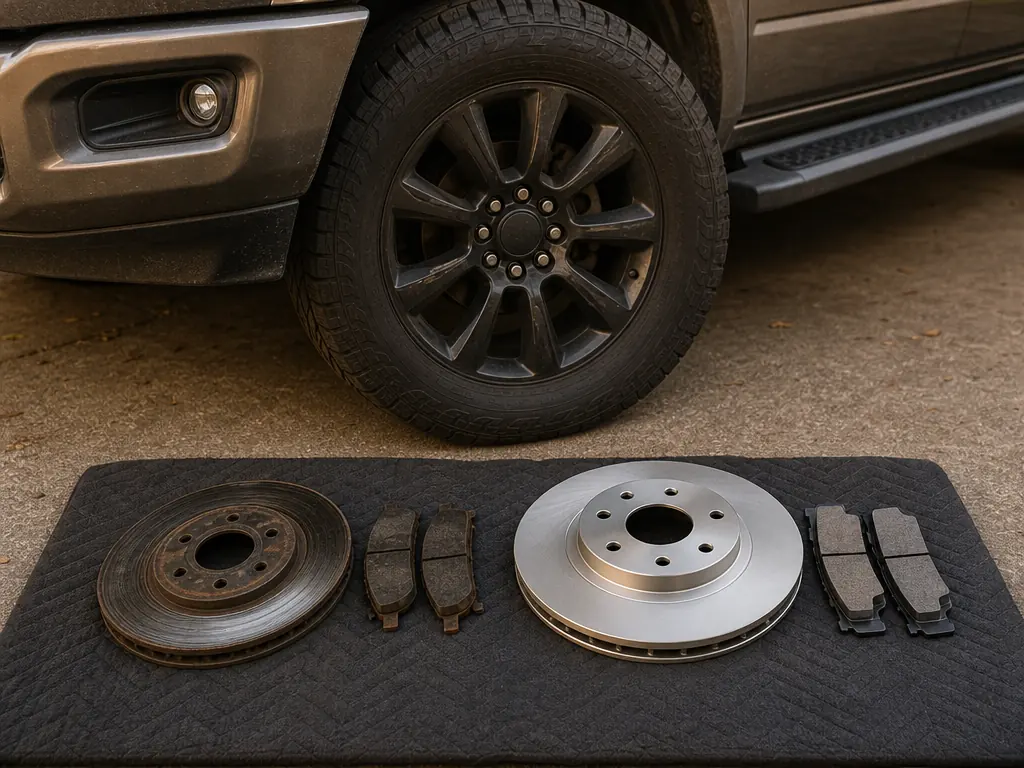
How to Choose Brake Pads and Rotors for Your Jeep or Truck
Once you know your brakes need work, the next choice is what goes back on. Not every pad suits every Jeep or truck, and the cheapest ones are the most common reason a brake job doesn't last.
Ceramic pads are quiet, make little dust and suit most daily drivers. Semi-metallic pads handle more heat, which suits a pickup that tows or a Jeep on bigger, heavier tires, at the cost of more dust and some noise. Noah matches the pad to how you use the vehicle, not to the lowest price on the shelf.
Plain rotors are the right call for most vehicles. Slotted or drilled rotors look the part, but they don't stop a stock Jeep or truck any better on the street.
Bigger tires change the math. A Jeep that went from stock tires to 33s or 35s has more weight and more leverage working against the same brakes, so pads and rotors wear faster and the pedal can feel weaker. A good heavy-duty pad helps. If you're planning a lift and bigger tires, plan the brakes with them.
Parts you supply: we'll install pads and rotors you've bought. They carry their manufacturer's warranty, just like parts we supply, and our labor to install them carries our lifetime warranty. The details are in our terms and conditions.
Brake Job Cost: How Much Is a Brake Job With Heritage?
Which parts you choose is the biggest thing that moves the price, so here's how a brake job is priced with us.
- The quote is free. Tell us the year and model and what the brakes are doing, send a few photos if you can, and Noah gives you a quote by phone. If he needs to see it, he stops by. You know the price before any work starts.
- No diagnostic fee on a straightforward brake job, like worn pads, a squeal or grinding.
- No trip fee anywhere in our service area.
- Pads and rotors start at $450, parts and labor included, on Jeeps and half-ton pickups. Heavy-duty 2500 and 3500 trucks cost more, because their parts do, and get their own quote.
- Other brake work, like a caliper, hose or line, is quoted as a set price too, at $120 an hour for labor.
What moves a brake job's cost: pads only or pads and rotors, one axle or both, whether a caliper, hose or line needs replacing, the grade of pad your vehicle needs, and whether you supply the parts. Parts come from the same suppliers shops use, usually in 1–3 days, and Noah brings them to the job. And because there's no storefront or front office to pay for, the price goes into the parts and the work.
Jeep and Truck Brakes Explained: Pads, Rotors, Calipers & Fluid
Knowing how the system works makes the quote easier to follow, and makes it obvious why one worn part leads to another.
When you press the pedal, the master cylinder pushes brake fluid through the lines to each wheel. At each disc brake, the fluid pushes a piston in the caliper, and the caliper squeezes the pads against the rotor that spins with the wheel. Some trucks and older Jeeps still have drum brakes in the rear, which work the same way with shoes pressing inside a drum. Friction turns the vehicle's motion into heat, and the rotor carries that heat away.
That's why the parts wear together. A caliper slide that seizes keeps one pad pressed against the rotor, which overheats the rotor and wears the pad unevenly. A rotor that's too thin can't shed heat, so the pads glaze and the stopping power fades. Old fluid that's absorbed water can boil in that heat, and the pedal goes soft right when you need it.
Weight and tire size multiply all of it. A heavy pickup with a trailer, or a Jeep on oversized tires, asks the brakes to absorb far more energy on every stop, which is why those vehicles go through pads and rotors faster and why the whole system deserves a look each time.
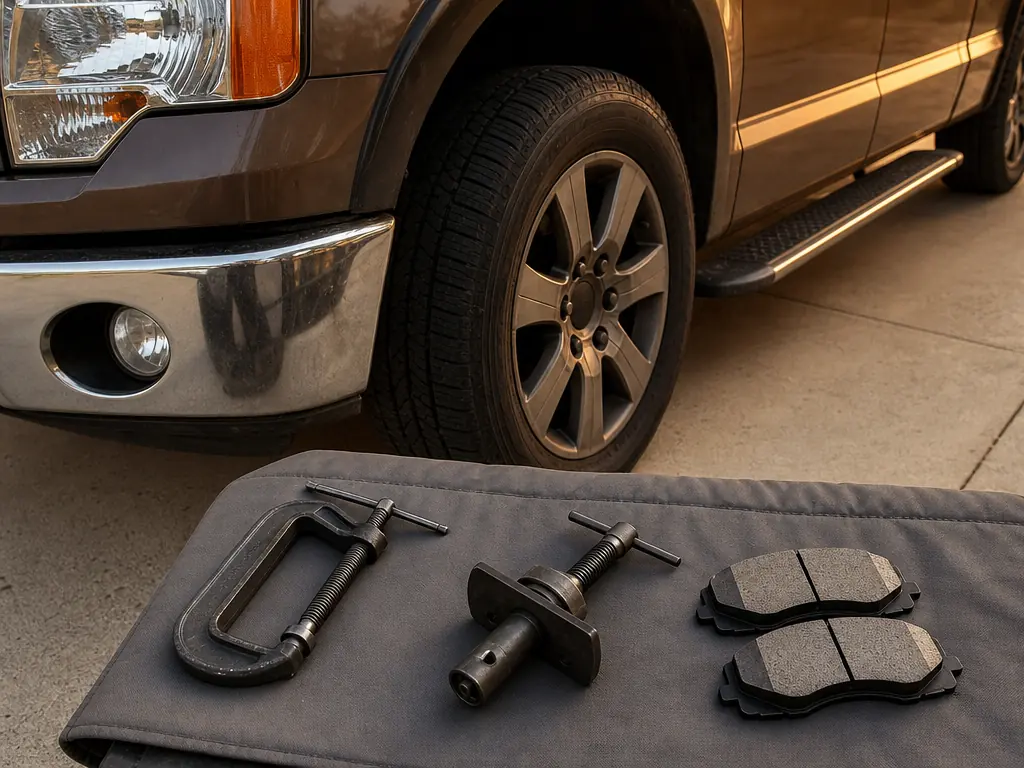
Mobile Brake Repair for Jeeps, Pickups & SUVs
The same system is on every vehicle we work on, but each one wears its brakes in its own way.
Jeeps. Wrangler TJ, JK and JL, Gladiator and Cherokee XJ. Jeep Wrangler brake replacement is a regular job for us, especially on Jeeps running larger tires, where pads and rotors wear faster than the factory planned. More on our JK and JL Wrangler, TJ and LJ Wrangler and Gladiator pages.
Pickup trucks. Ford F-150, Chevy Silverado, Ram 1500, Toyota Tacoma and Tundra, and similar trucks, plus heavy-duty 2500 and 3500 pickups, whose brakes are quoted separately because the parts cost more. Mobile truck brake repair matters most on pickups that tow or haul, since the extra weight heats the brakes harder. Shaking when braking and other truck problems are on our truck and SUV repair page.
SUVs. Pads, rotors, calipers, lines and fluid.
What we don't work on: cars, minivans and crossovers. We'd rather be the best brake mechanic for your Jeep or truck than an average one for everything.
5 Brake Job Mistakes That Cost You Twice
Whatever you drive, the brake jobs that come back early usually made one of these mistakes.
1. New pads on worn rotors
Fresh pads on a rotor below its minimum thickness won't seat properly and wear out fast. How we do it: we measure the rotors and tell you if they need replacing.
2. Skipping the caliper slides
Seized slides wear the new pads unevenly within months. How we do it: we clean and lubricate the slides on every brake job.
3. The cheapest pads on a heavy vehicle
Budget pads on a towing truck or a Jeep on big tires overheat and fade. How we do it: we match the pad to how you drive.
4. Ignoring old brake fluid
Fresh pads don't fix a soft pedal caused by water in the fluid. How we do it: we check the fluid and tell you when it's due.
5. Wheels hammered on with an impact gun
Over-tightened lug nuts can warp new rotors and bring the shake right back. How we do it: every lug nut is torqued to spec with a torque wrench, and every brake job ends with a test drive.
Brake Repair in Louisville, KY — What Our Roads Do to Brakes
Those mistakes catch up with you faster here, because Louisville is hard on brakes.
Winter is the biggest reason. Kentucky road crews salt hard, and that salt gets into everything behind the wheel. It corrodes rotors, seizes caliper slides and rusts steel brake lines, which is why so many brake problems show up between December and March. A Jeep or truck that sits through a salty week can come out with rusted rotors and a pedal that feels different.
Then there's how we drive. Rush-hour stop-and-go on I-64, I-65, I-71 and the Gene Snyder means hundreds of hard stops a week. On the Indiana side, the steep roads up and down Floyds Knobs heat the brakes on every descent. And plenty of pickups and Jeeps around here tow, whether it's a boat out to Taylorsville Lake, a camper, or a trailer for work, which puts far more heat into the brakes than the commute does.
Ask around Louisville about where to get brakes done and you'll get a long list of shops, each one a drop-off and a lost day. Heritage brings the brake job to your driveway instead, on a weekday evening or a weekend, on both sides of the river. Our mobile mechanic in Louisville page covers the city in more detail.
How Mobile Brake Service Works With Heritage
Here's how a brake job goes, from the first call to the test drive.
- 01
Tell us what it's doing
Use the form or call (502) 557-6786 with the year and model and what the brakes are doing. A few photos of the wheels help.
- 02
Get your free quote
Noah quotes the job by phone, from your photos, or with a quick stop at your house, and sets a time on a weekday evening or a weekend.
- 03
Parts arrive
Parts come from the same suppliers shops use, usually in 1–3 days, and Noah brings them to the job.
- 04
The brake job in your driveway
Noah checks the whole system, replaces what's worn, cleans and lubricates the slides, bleeds the brakes if needed, and torques every wheel to spec.
- 05
Test drive and walk-through
He test drives it to seat the new pads, shows you the old parts and tells you what to watch for. Our mobile mechanic page covers everything else we fix at your place.
Mobile Brake Repair Questions, Answered
Is there a mobile brake repair near me for Jeeps and trucks?
Yes. Heritage 4x4 Outfitters does mobile brake repair for Jeeps, pickups and SUVs across Louisville and Southern Indiana, within about 30 miles. We come to your home or work on weekday evenings and weekends, with no trip fee.
How much is a brake job?
Pads and rotors start at $450, parts and labor included, on Jeeps and half-ton pickups. Heavy-duty 2500 and 3500 trucks cost more because the parts do. The quote is free and comes before any work starts, there's no trip fee, and a straightforward brake job carries no diagnostic fee. The final price depends on whether you need pads alone or pads and rotors, how many axles, and whether a caliper or line needs replacing.
Do you do brakes on cars?
No. We work only on Jeeps, pickup trucks and SUVs. If your vehicle isn't one we take on, we'll say so on the first call.
What if my brakes aren't safe to drive?
That's where a mobile mechanic helps most. Don't drive a vehicle that's grinding metal-on-metal or has a pedal that sinks. We come to it, so there's no tow and no risky drive to a shop.
Do I need new rotors with a mobile brake pad replacement?
Not always. Rotors get replaced when they're below the minimum thickness stamped on them, warped or deeply grooved. Noah measures them and tells you which yours are before you decide.
Can you do my brakes at my apartment or office?
Usually, if the property allows repairs in its lot. Some apartment complexes and HOAs don't, so check first, and we'll work out another spot if needed. We need a level, paved place to park with room to work around the vehicle.
How do I know if it's my brakes or my steering?
If the shake or pull only happens when you brake, it's almost always the brakes. If it happens while you drive, or it's a violent shake at highway speed, it's more likely steering or suspension, and we check both.
Can I supply my own brake parts?
Yes. We'll install pads and rotors you've bought. Parts you supply carry their manufacturer's warranty, just like parts we supply, and our labor to install them carries our lifetime warranty. The details are in our terms and conditions.
How often should brake pads be replaced?
It depends on how you drive, not on a set mileage. Towing, stop-and-go traffic and bigger tires all wear pads faster. Have them looked at whenever the tires come off, and call when you hear the squeal, before it turns into grinding.

Mobile Brake Repair Across Louisville & Southern Indiana
We come to homes and workplaces within about 30 miles of Louisville. That covers Jefferson, Oldham, Bullitt, Shelby and Spencer counties in Kentucky, and Clark and Floyd counties in Indiana.







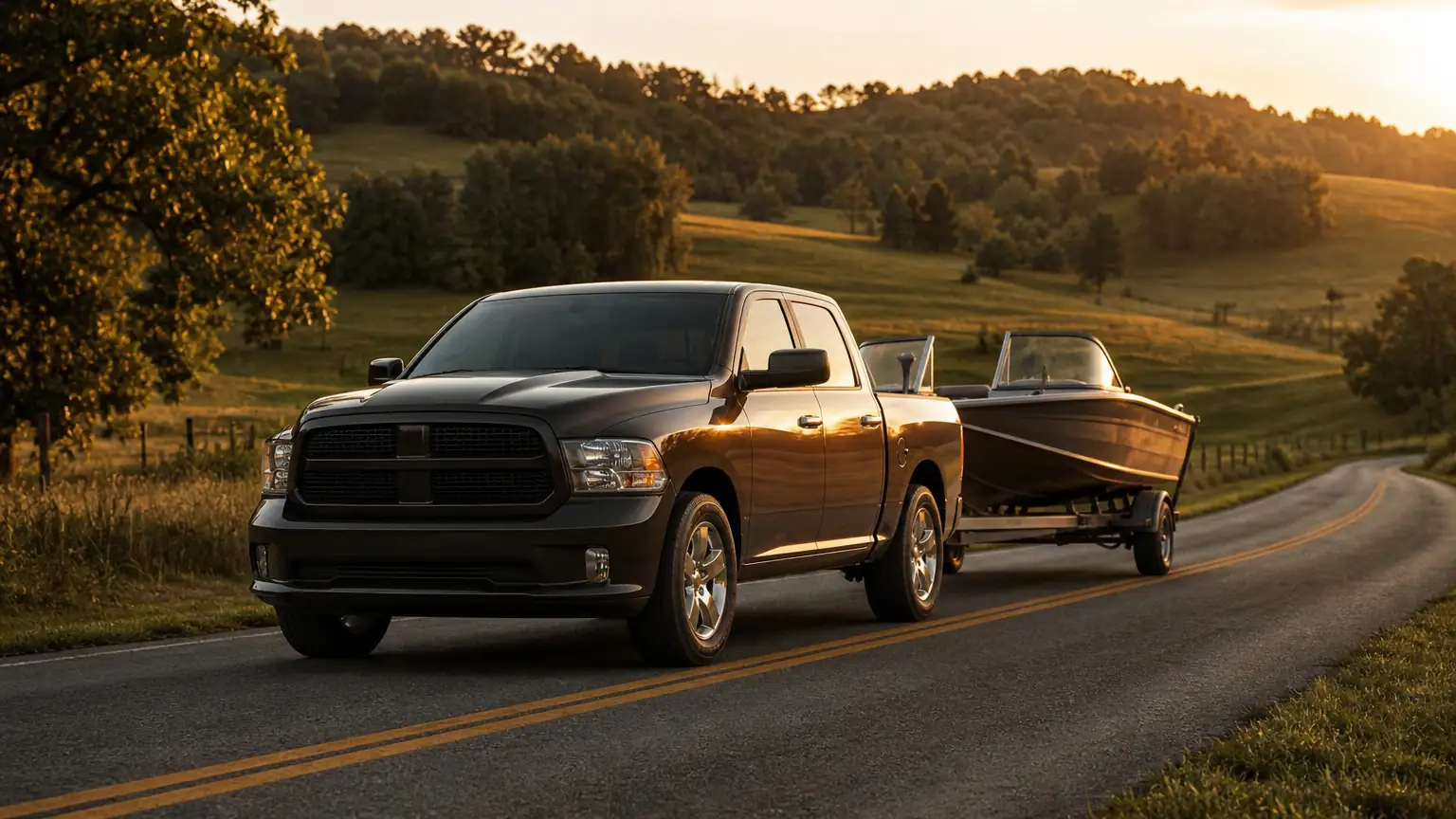
Brakes Done in Your Driveway
A free quote, the whole system checked, and the brake job done at your place on evenings and weekends, with no trip fee.