
Jeep Wrangler Check Engine Light: What It Means and What to Do Next
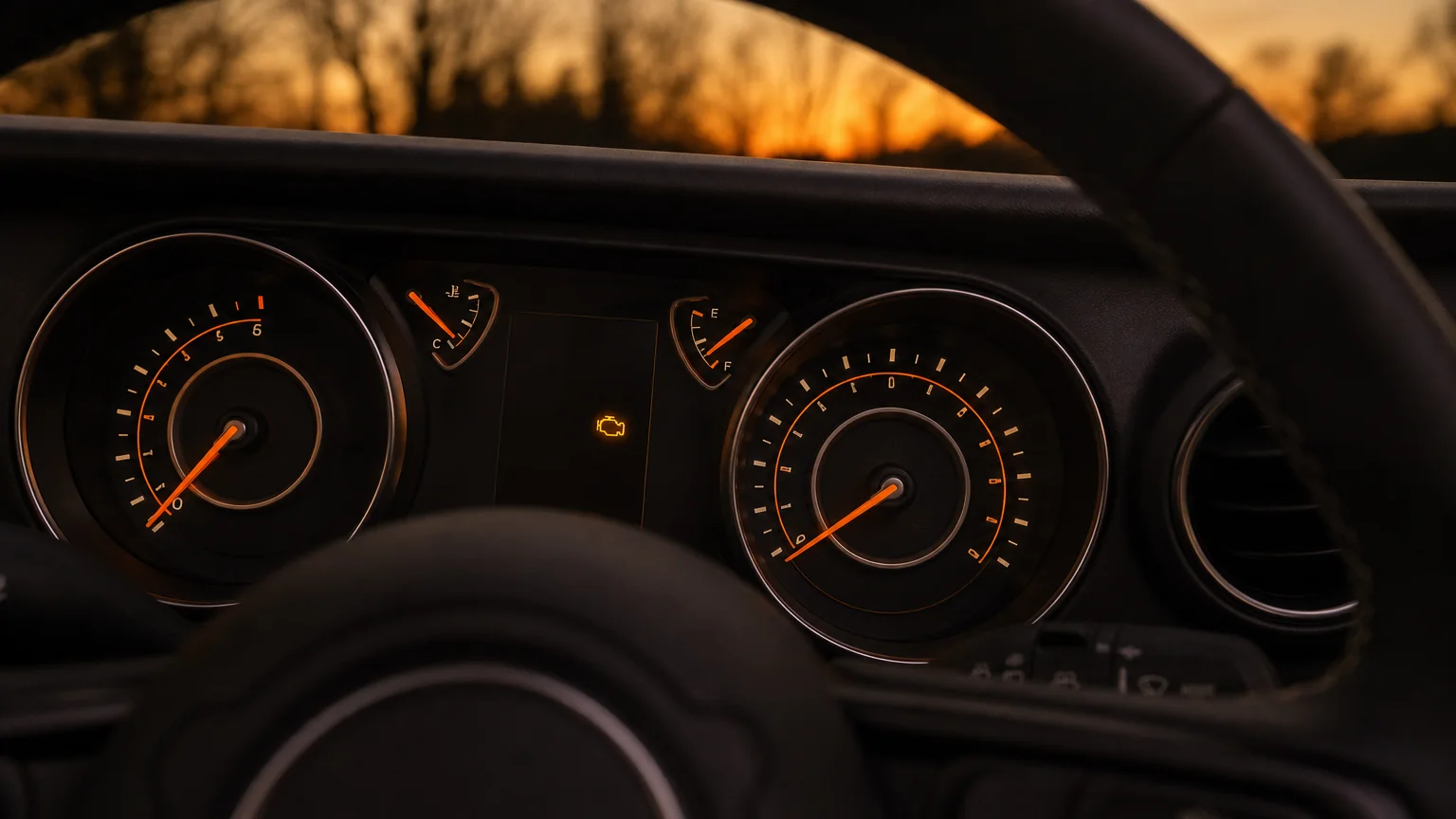
Heritage 4x4 Outfitters · Updated October 2026A Jeep Wrangler check engine light means the engine computer ran one of its self-tests and something failed. It doesn't tell you what broke. It tells you which system to look at. A steady light usually means you can keep driving and get it checked soon. A flashing light means stop driving hard right away, because something is happening that can damage the engine or the catalytic converter. Here's how to tell the difference, what usually causes it on a Wrangler, and how to find the real problem without buying parts you don't need.
What a Jeep Wrangler Check Engine Light Actually Means
Every Wrangler built since the 1996 model year, from the TJ on, has an onboard computer that watches the engine and emissions systems while you drive. It checks things like how the engine is firing, how much oxygen is in the exhaust and whether the fuel system is sealed. When a reading falls outside the range it expects, it stores a trouble code and turns on the light.
The code is a starting point, not an answer. A code like P0302 says cylinder 2 is misfiring. It doesn't say whether that's a spark plug, a coil, a fuel injector or a wiring problem. That's the part that takes diagnosis.
Older Jeeps work differently. A CJ has no OBD-II computer at all, so there's no code to read; finding a running problem on a CJ is done the old-fashioned way, with testing and experience.
Solid or Flashing: How Urgent Is It?
Before anything else, look at how the light is behaving, because that tells you how fast to act.
A solid light means a fault was stored, but the engine isn't in immediate danger. It's safe to drive normally and get it checked soon. Don't ignore it for months, though: a small problem like a failing sensor can make the engine run rich, waste fuel and slowly damage the catalytic converter.
A flashing light means the engine is misfiring badly enough that unburned fuel is going into the exhaust. That fuel can overheat and ruin the catalytic converter, which is an expensive part. Ease off, avoid hard acceleration and get the Jeep checked before you drive it much further.
A light plus other symptoms changes things. If the temperature gauge is climbing, the oil light is on, or the engine is stalling or knocking, pull over safely and shut it off. Those aren't problems to drive on.
The Most Common Causes of a Wrangler Check Engine Light
Once you know how urgent it is, the next question is what's behind it. On Wranglers, a handful of causes show up again and again.
A Loose Gas Cap or an EVAP Leak
The fuel system is sealed so fuel vapor doesn't escape. A gas cap that isn't tightened, or a cracked hose in the evaporative (EVAP) system, sets a leak code. It's the cheapest fix there is, and the most common reason the light comes on right after filling up.
Oxygen Sensors
Oxygen sensors measure the exhaust so the computer can adjust the fuel mix. They wear out with age, and they also report false readings when there's an exhaust leak ahead of them.
Misfires
Worn spark plugs, a failing coil, a clogged injector or a vacuum leak can make one or more cylinders misfire. A misfire is the usual cause of a flashing light.
Cam and Crank Position Sensors
These sensors tell the computer where the engine is in its rotation. When one fails, the engine can stumble, stall or refuse to start. On older Wranglers like the TJ, a failing crankshaft position sensor is a well-known cause of stalling when the engine is hot.
Wiring and Connectors
Kentucky winters bring road salt and wet weather, and both get into connectors and grounds. On older Jeeps especially, a corroded connector or a chafed wire sets sensor codes even when the sensor itself is fine.
Why a Code Reader Isn't a Diagnosis
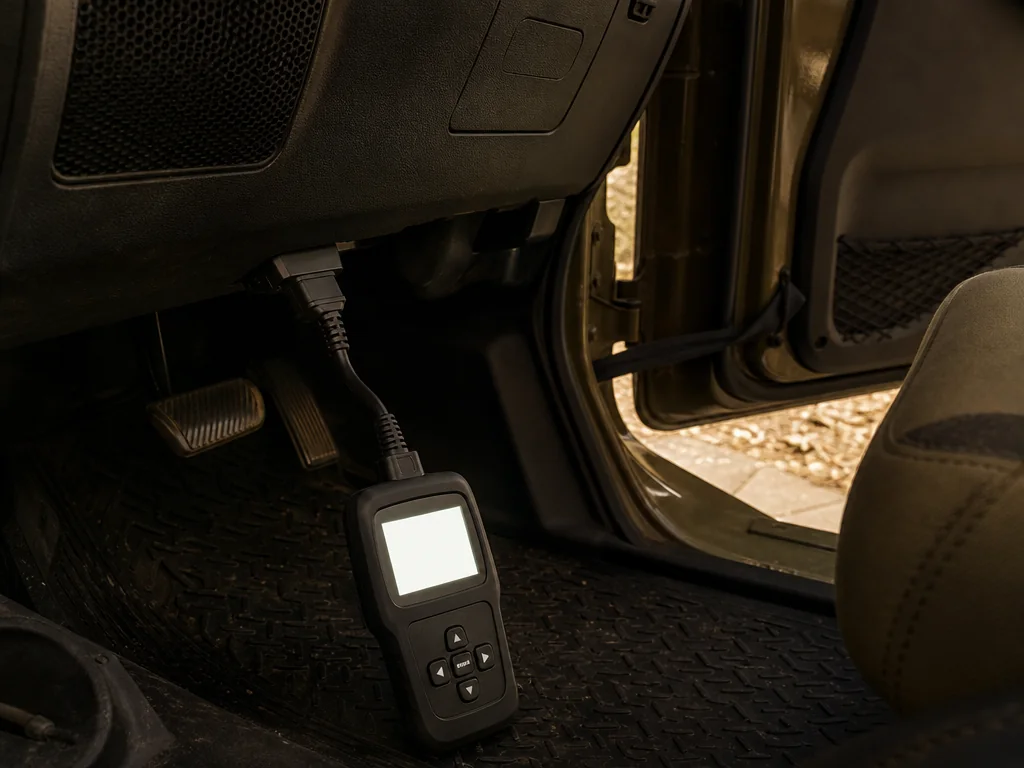
Knowing those common causes makes it tempting to read the code and buy the part. Most auto parts stores will read your codes for free, and a basic code reader costs less than a tank of gas. That's useful information. It just isn't a diagnosis.
A code tells you which test failed, not which part caused it. An oxygen sensor code can come from a bad sensor, a cracked exhaust manifold, a vacuum leak or a damaged wire. Replace the sensor when the real problem is an exhaust leak, and the light comes back within a few days. You've paid for a part you didn't need.
That's how a $40 problem turns into a few hundred dollars of parts. Reading the code is step one. Testing what the code points to is the actual diagnosis.
What a Real Check Engine Light Diagnosis Includes
So what does that testing look like? It's what people often mean by an automotive diagnostic test, and done right it goes well past plugging in a scanner:
- Read every stored code and the freeze-frame data. The freeze frame is a snapshot of speed, temperature and load at the moment the code set, which says a lot about when the problem happens.
- Look for related codes. Two or three codes together often point to one shared cause, like a single bad ground.
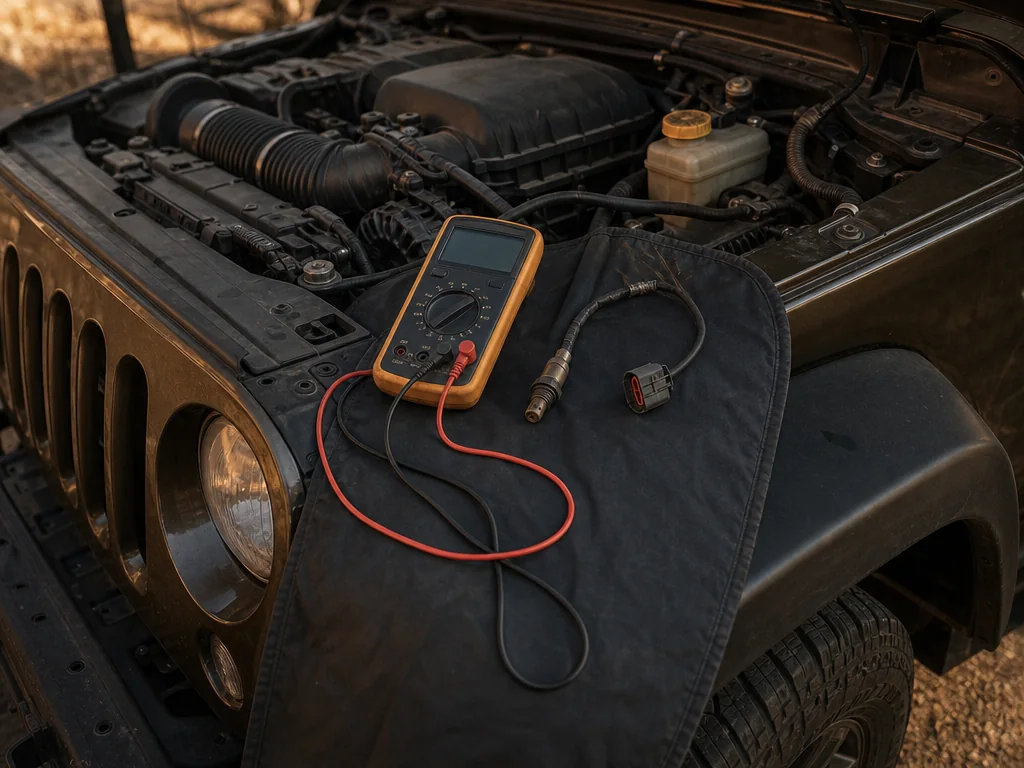
- Test the circuit and the part. Check the wiring, connectors and grounds, and test the sensor or component the code names, before calling it bad.
- Check for leaks. Vacuum and exhaust leaks fool sensors into reporting problems that aren't theirs.
- Drive it if needed. Some faults only show up under load or at temperature.
- Explain it in plain words. What failed, what it costs to fix and what can wait.
That's the difference between a guess and an answer, and it's why we diagnose before we sell parts.
Check Engine Lights by Wrangler Generation
How a check engine light gets diagnosed also depends on which Wrangler you have.
CJ (up to 1986). No computer and no codes. Running problems are found by testing ignition, fuel and vacuum by hand.
XJ Cherokee (1984–2001) and TJ Wrangler (1997–2006). Simpler engine computers with plenty of age on the wiring and sensors. These are the Jeeps where corroded connectors, tired sensors and vacuum leaks cause most lights, and they're well suited to a careful diagnosis at home. More on our TJ and LJ Wrangler and XJ Cherokee pages.
JK Wrangler (2007–2018). More electronics, but still a strong candidate for a driveway diagnosis, especially the earlier years. More on our JK and JL Wrangler page.
JL Wrangler (2018–present) and Gladiator. Far more electronics and modules. If your JL is under factory warranty, start with the dealer. Complex electrical problems on newer Jeeps are dealer work, and we'll tell you that up front rather than guess.
What You Can Do Before You Call
Whatever you drive, a few simple steps can save time and money before anyone looks at it.
- Tighten the gas cap until it clicks. If that was the cause, the light usually goes out on its own after a few days of normal driving.
- Note what's happening. When the light came on, whether it's solid or flashing, and anything that feels different: rough idle, hesitation, smell, a new noise.
- Check the basics. Oil level and coolant level take two minutes and rule out bigger trouble.
- Don't clear the code to make the light go away. Clearing it, or disconnecting the battery, erases the freeze-frame data that helps find the cause, and the light comes back if the problem is still there.
Getting a Check Engine Light Diagnosed in Louisville
If the light stays on, here's how we handle it. Heritage 4x4 Outfitters is a mobile Jeep mechanic for Louisville and Southern Indiana. Noah, the owner, comes to your home or work on a weekday evening or a weekend and diagnoses the check engine light in your driveway. The diagnostic is $120, there's no trip fee, and you get a plain answer and a clear price before any parts are ordered.
We diagnose engine and running problems on CJs, XJs, TJs and JKs. If you already know what the job is, say a sensor someone else found or a set of brakes, you get a free quote instead. For everything else we fix at your place, see our mobile mechanic page.
Jeep Wrangler Check Engine Light Questions
Can I drive my Jeep Wrangler with the check engine light on?
If the light is solid and the Jeep drives normally, yes, for now. Get it checked soon so a small problem doesn't grow. If the light is flashing, or the temperature or oil light is also on, stop driving hard and get it looked at before going further.
Why did my check engine light come on after I got gas?
Most often the gas cap wasn't tightened all the way, which sets an evaporative system leak code. Tighten it until it clicks and give it a few days of driving. If the light stays on, there may be a leak somewhere else in the system.
Will disconnecting the battery reset the check engine light?
It will usually turn the light off, but it doesn't fix anything. It also erases the stored data that helps find the cause, and the light comes back once the computer sees the problem again.
How much does a check engine light diagnosis cost?
Our diagnostic is $120, done at your home or work with no trip fee. You get the cause and a clear price for the repair before any parts are ordered.
Do you diagnose check engine lights on a JL Wrangler?
Complex electrical problems on newer Jeeps, including JLs, are best handled by the dealer, especially while the Jeep is under warranty. We'll still help with the mechanical work we do on JLs, like brakes, steering and suspension.